

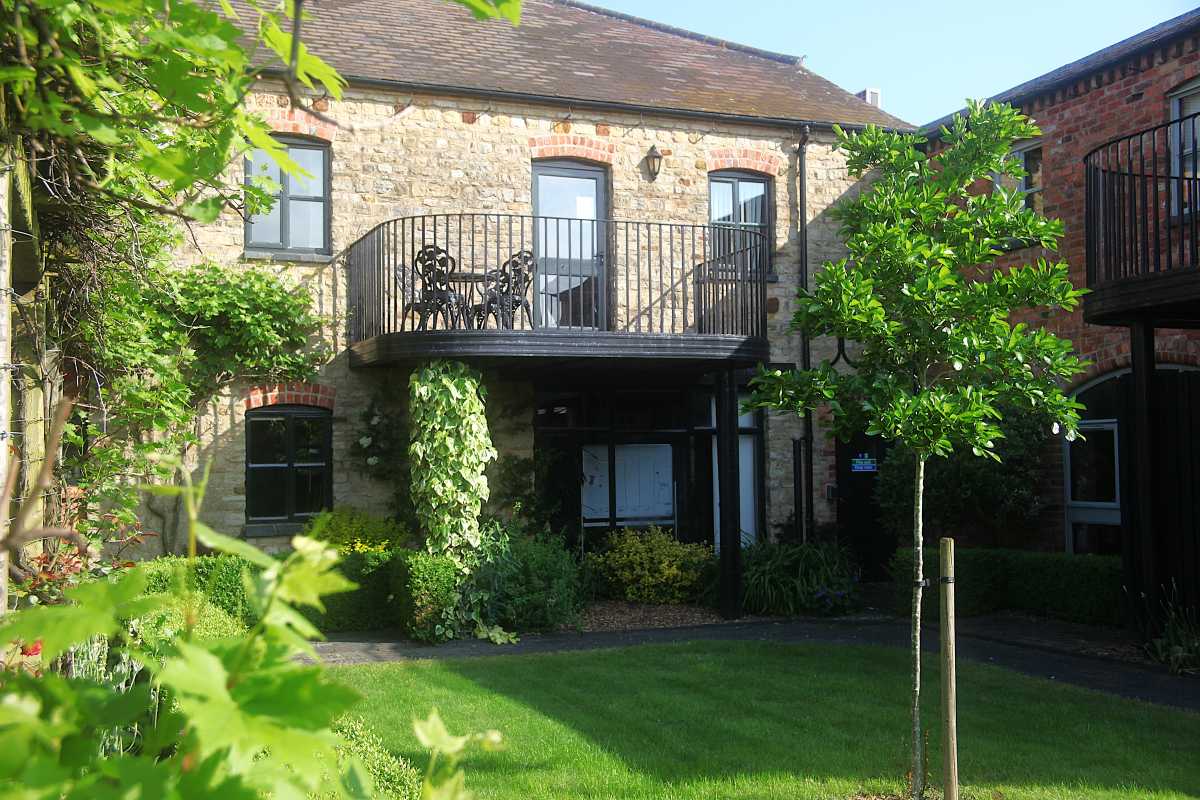
Deep Reclamation: Why UK Projects Are Crossing the 50% Reclaimed Materials Mark

For years, reclaimed materials in UK construction meant a single feature: a salvaged door, a run of old brick as an accent, a stack of slates propped against a garden wall for character. That era is closing. Across 2025 and into 2026, architects, self builders, and landscape designers are pushing past decorative salvage and into something bigger. It’s what we’re starting to call Deep Reclamation. These are projects where more than half of all materials by volume come from reclaimed, salvaged, or repurposed stock.
This shift isn’t happening in isolation. Building Regulations Part L continues to tighten operational carbon targets, and the emerging Part Z framework, still under development but already shaping specification decisions, proposes mandatory embodied carbon reporting for major developments. Meanwhile, the GLA’s circular economy statements now require applicants to demonstrate how schemes reduce waste and maximises reused content. This is from the earliest design stages, not as an afterthought bolted on at planning.
The effect is that reclaimed material sourcing has moved from the finishing touches of a project brief to its foundation. Quantity surveyors are now asked to hit circular construction framework targets the same way they’d hit a budget line. For landscape designers in particular, hardscaping offers one of the most straightforward routes to a majority reclaimed spec. Because stone and clay products age well, retain structural integrity, they’re available in genuine volume through the UK’s reclamation network.
Material Transmutation: Creative Repurposing Beyond Original Intent
The most interesting projects crossing the 50% threshold aren’t simply reusing materials for their original purpose. Roof tiles going back onto a roof, reclaimed bricks going back into a wall is a good start and understably easy to conceive. But the designers in these projects are practising a kind of material transmutation. This is taking an element designed for one function and finding an entirely different structural or aesthetic role for it. This is where Deep Reclamation becomes genuinely creative, rather than just responsible.
Roof Tiles and Slates as Garden Walls and Pathways
Old clay roof tiles and natural slates are typically thin, dense, and extremely durable — properties that made them excellent at shedding rain for a century, and which make them equally excellent underfoot or as a boundary feature once removed from a roof.
Laid on edge, either stacked horizontally in overlapping courses or set vertically like a row of fins, reclaimed tiles and slates create garden walls with a strongly geometric, almost woven texture that new manufactured products struggle to replicate convincingly. The irregular weathering across each tile — the variation in weathered patina, moss shadowing, and edge wear — means no two metres of wall look identical, which is precisely the character clients are now specifying. This approach embodies Deep Reclamation.

Used as pathway material, tiles set on edge in a herringbone or basket weave pattern produce a genuinely high grip, tactile surface, since the fired clay edge has a rougher profile than a flat laid tile face. There’s a functional bonus too: the density of fired clay and slate gives these paths exceptional thermal mass, meaning they absorb daytime heat and release it slowly, which can measurably reduce overnight frost formation on the surface compared with lighter aggregate paving.
Beyond the Accent Wall: How Reclaimed Sandstone and Yorkstone Are Rebuilding UK Gardens
Yorkstone steps — particularly older sculpted examples with bullnose overhangs or crisp square mouldings — are frequently decoupled from demolished stairways and given a second life entirely removed from their original vertical function.
Laid flat and bedded along the top of a low garden wall, a reclaimed step with a bullnose edge becomes an instant coping, its rounded overhang doing double duty as a rain shedding detail and a comfortable seat edge. Larger or thicker steps, particularly those with a squared moulding profile, work well simply set on masonry piers or sleeper bases to form heavy, permanent garden benches — no fixings required beyond gravity and good bedding.
Stacked in graduated sizes, the same steps become modular bases for tiered planting schemes, with each stone’s worn tread surface providing a naturally non-slip planting shelf. This kind of creative repurposing is precisely what distinguishes Deep Reclamation from conventional salvage: the material’s second life bears no resemblance to its first, yet the resulting feature reads as though it was always intended that way.
Why Choose Reclaimed Stone? The Sustainability and Performance Case
Why choose reclaimed sandstone or Yorkstone over a new imported equivalent? The short answer is that decades of exposure to British weather have already done the stress testing that a virgin import hasn’t undergone.
 A reclaimed Yorkstone flag that’s spent eighty or a hundred years exposed to frost, rain, and freeze/thaw cycling has demonstrably proven its frost resistance and structural strength. It has not split, delaminated, or flaked — and if it were going to, it already would have. Cheaper modern imports, by contrast, are frequently quarried from softer, less consistent seams and can begin to spall within a handful of winters, particularly where freeze/thaw cycling is involved. Sandstone durability in reclaimed stock is, in effect, a matter of historical record rather than a manufacturer’s claim.
The carbon case for Deep Reclamation is just as compelling. Quarrying, cutting, and shipping virgin stone, often from overseas, carries a substantial carbon cost before it reaches the UK. Directly reusing structural or landscaping elements sidesteps almost all of that: extraction, primary processing, and long-haul transport are avoided entirely. Industry lifecycle assessments suggest that specifying reclaimed structural and landscaping stone in place of virgin material can cut a project’s embodied carbon emissions by up to 75%. For developments chasing BREEAM materials credits, this is not a marginal gain — it can be the difference between a credible sustainability narrative and a superficial one.
Structural Design Matrix: Virgin Imports vs UK Reclaimed Features
| Attribute | Virgin Imported Hardscaping Materials | UK Reclaimed Architectural Features |
| Embodied Carbon Footprint | High — quarrying, processing, and long distance freight all add significant carbon before installation | Low — extraction and processing carbon already spent; up to 75% embodied carbon savings versus virgin equivalents |
| Pre-Weathered Aesthetics | None — uniform, flat finish requiring years to develop character or patina naturally | Established — decades of natural weathering produce genuine patina, colour variation, and texture from day one |
| Frost & Climate Resilience | Unproven in UK conditions; some imported stone is prone to spalling and delamination under freeze-thaw cycling | Field-proven — decades of British winters confirm frost resistance and structural integrity |
| Local Supply Chain Reliability | Vulnerable to shipping delays, currency fluctuation, and quarry supply disruption | Sourced from regional reclamation yards, reducing lead times and insulating projects from international disruption |
Conclusion: Specify Reclaimed From the Concept Stage
Deep Reclamation addresses three pressures at once. Firstly, it responds directly to material scarcity in an industry still feeling the effects of global supply disruption. Secondly, it removes UK developments from dependency on volatile international shipping and quarrying markets. Lastly, it delivers spaces with a depth of character that no manufactured product can convincingly fake.
The projects doing this well aren’t treating reclamation as a late stage substitution exercise. They’re building the entire concept around what’s actually available in the regional reclamation yard network from day one.
If you’re an architect, self builder, or landscape designer starting a new scheme, the practical takeaway is straightforward. Inventory your regional reclamation yards during the initial concept phase, not the procurement phase. Visit before you draw, not after you’ve specified. The stone, tile, and stepping stock available locally should shape the design brief — not the other way round. That single change in sequencing is separating a project with token reclamation from one that genuinely crosses the 50% threshold.

