

The British summer of 2026 has rewritten the meteorological history books and help is needed for our gardens to beat the heat. In an unprecedented climatic sequence, the United Kingdom has been subjected to back-to-back atmospheric anomalies. Indeed, an historic meteorological event in late June shattered regional records—posting a provisional 37.7°C high at Lingwood, Norfolk. Surprisingly, this was immediately followed by a second intense Saharan heat dome in July. Propelled by rapidly escalating global sea-surface temperatures and an active Pacific El Niño phase, these subtropical high-pressure systems have trapped sizzling air masses directly over the British Isles. As a result, this subjects domestic landscapes to profound heat stress and prolonged drought.
With municipal systems strained under exceptional seasonal demand, water companies are enforcing emergency conservation mandates. Unfortunately, for millions of households, the traditional reliance on mains-powered irrigation is officially over for the foreseeable future. Consequently, navigating this new gardening paradigm requires transitioning from reactive hydration to structural, climate-resilient water security.
The Reality of the 2026 Hosepipe Bans
These consecutive heat domes drain infrastructure assets faster than water treatment plants can physically process and replenish them. As a result, and partly down to wilful mismanagement, water suppliers have moved swiftly from conservation appeals to statutory enforcement. Temporary Use Bans (TUBs)—commonly known as hosepipe bans—are rolling out across the nation to preserve vital domestic drinking supplies.
| Water Company | Statutory Status | Effective Date | Primary Regions Affected |
|---|---|---|---|
| South East Water | 🔴 TUB In Full Force | 3 July 2026 | Kent Supply Networks (~850,000 customers) |
| Yorkshire Water | 🟠 TUB Declared / Active | 11 July 2026 | Full Yorkshire Service Area (~5,000,000 customers) |
| Southern Water | 🟠 TUB Declared / Upcoming | 21 July 2026 | Hampshire and Isle of Wight (~1,000,000 customers) |
| Thames & Severn Trent | 🔵 Active Conservation Appeal | Ongoing | London, Thames Valley, and the Midlands |
Violations of these statutory restrictions carry civil penalties of up to £1,000 under the Water Industry Act. However, while standard hosepipes, oscillating lawn sprinklers, and pressure washers are strictly prohibited, current regulations allow for targeted manual irrigation. For example, watering cans, specialised low-volume drip-irrigation networks and, of course, use of grey water, are available options. The mandate is clear: gardeners must pivot toward self-sufficient rainwater harvesting networks to keep their valuable landscapes alive.
Will the UK See Further Heat Domes This Year?
Long-range predictive modeling from the Met Office, the World Meteorological Organization (WMO), and the Copernicus Climate Change Service (C3S) indicates that the atmospheric instability defining the summer of 2026 is far from exhausted. Historical baselines are shifting rapidly; Western Europe has warmed by approximately 2.0°C over the past half-century. As a result, it’s one of the fastest-warming maritime regions globally.
Furthermore, climatologists warn that the structural combination of record-breaking North Atlantic marine heatwaves and persistent subtropical jet-stream blocking patterns creates an environment ripe for further high-pressure anomalies. Additionally, predictive algorithms indicate a high probability of another heat dome event emerging between late July and mid-August 2026. Rather than treating these extreme spikes as isolated emergencies, British homeowners must integrate permanent water-security architecture into their outdoor spaces.
Beat the Heat with Strategic Engineering: Water Tanks and Storage
Achieving absolute drought insulation requires expanding on-site storage capacity. When evaluating rainwater harvesting hardware, property owners must balance volumetric requirements against spatial aesthetics.
1. Industrial-Grade Polyethylene Water Tanks
For extensive residential landscapes, productive kitchen gardens, or mature borders, standard 210-litre plastic water butts are insufficient. Therefore, to calculate required capacity, consider the hydrological metric:
V = A × R × E, where V represents total harvestable volume, A is the roof catchment footprint, R is regional rainfall data, and E is a drainage efficiency constant (typically 0.85–0.90).
- Structural Benefits: Heavy-duty, UV-stabilized linear low-density polyethylene (LLDPE) tanks offer capacities ranging from 1,000 to 10,000+ litres. They feature sealed, insect-proof inspection hatches, integrated brass connection points, and structural ribbing designed to withstand immense hydrostatic pressures.
- Placement & Siting: Due to their substantial weight when filled (1 ext{ Litre} = 1 ext{ kg}), these units require a meticulously leveled, reinforced concrete plinth base. Additionally, a compacted aggregate substrate beneath, prevents structural shifting or subsidence.
2. Reclaimed Galvanised Steel Water Tanks
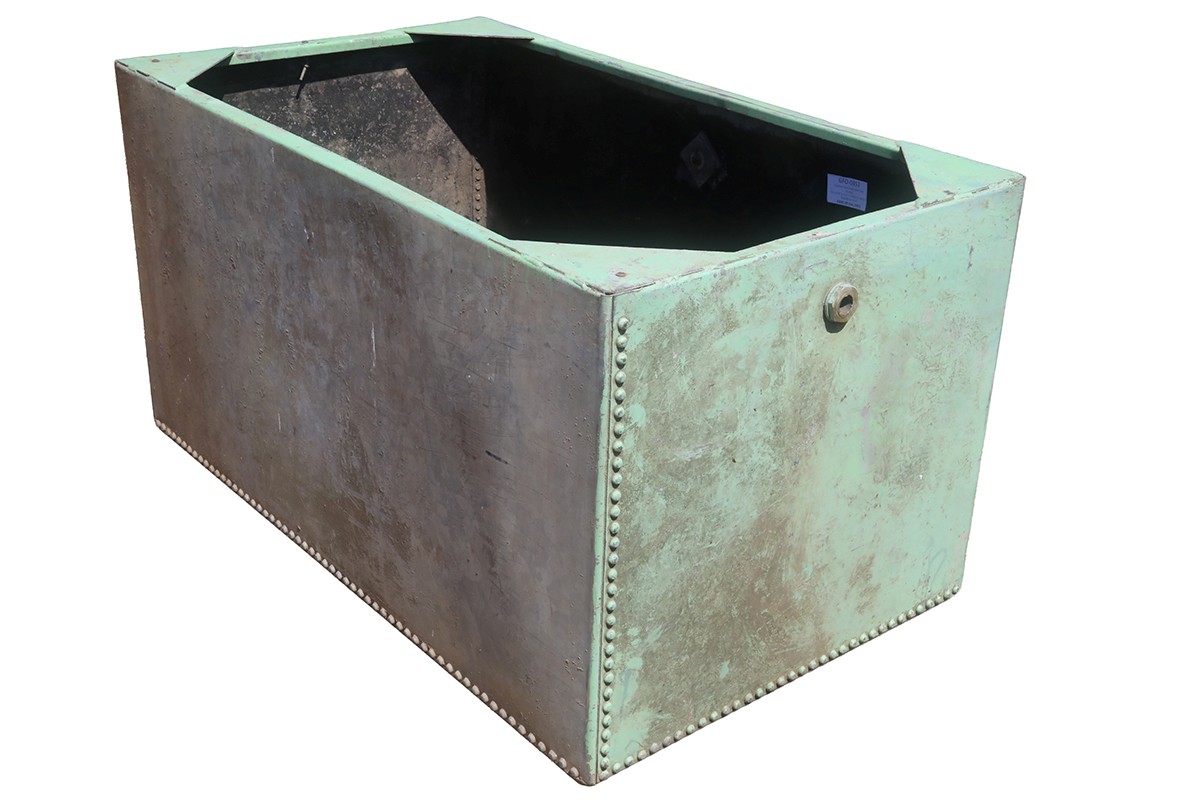 For large-scale water storage where single-use virgin synthetics are undesirable, reclaimed industrial galvanised steel tanks represent the gold standard in sustainable agricultural engineering.
- Sustainability & Circular Performance: Choosing a salvaged, zinc-coated steel repository is inherently superior to purchasing newly manufactured LLDPE plastic tanks. Indeed, by choosing the reclaimed route, gardeners bypass the fossil-fuel intensive polymer extraction phase. Moreover, this actively supporting circular-economy principles through the lifetime extension of heavy industrial components.
- Structural Integrity & Siting: Originally fabricated for livestock watering or industrial fluid transport, these heavy-gauge steel tanks feature robust sidewalls that offer immense structural rigidity against soil shifting and thermal expansion. In addition, like polyethylene tanks, their high volumetric density requires a reinforced, perfectly level concrete or compacted stone base to manage the extreme gravitational loading of stored water.
3. Reclaimed Wooden Oak Barrels

However, for smaller suburban landscapes or highly curated artisan gardens, large industrial plastic tanks can look visually jarring. Alternatively, reclaimed wooden barrels offer an elegant, eco-friendly alternative.
- Sourcing & Material Performance: Authentic, thick-walled 55-gallon (approx. 250-litre) oak barrels, salvaged from historic Scottish distilleries or traditional vineyards, are structurally outstanding. Importantly, the dense, seasoned oak fibers naturally swell upon contact with moisture, creating a completely watertight, pressure-resistant seal.
- Ecosystem Preservation: Oak barrels are a prime example of circular-economy manufacturing. Indeed, they help reduce the carbon footprint associated with virgin plastic production while providing an elegant, heavy-duty storage solution.
The Aesthetic Advantage: Integrating Reclaimed Containers
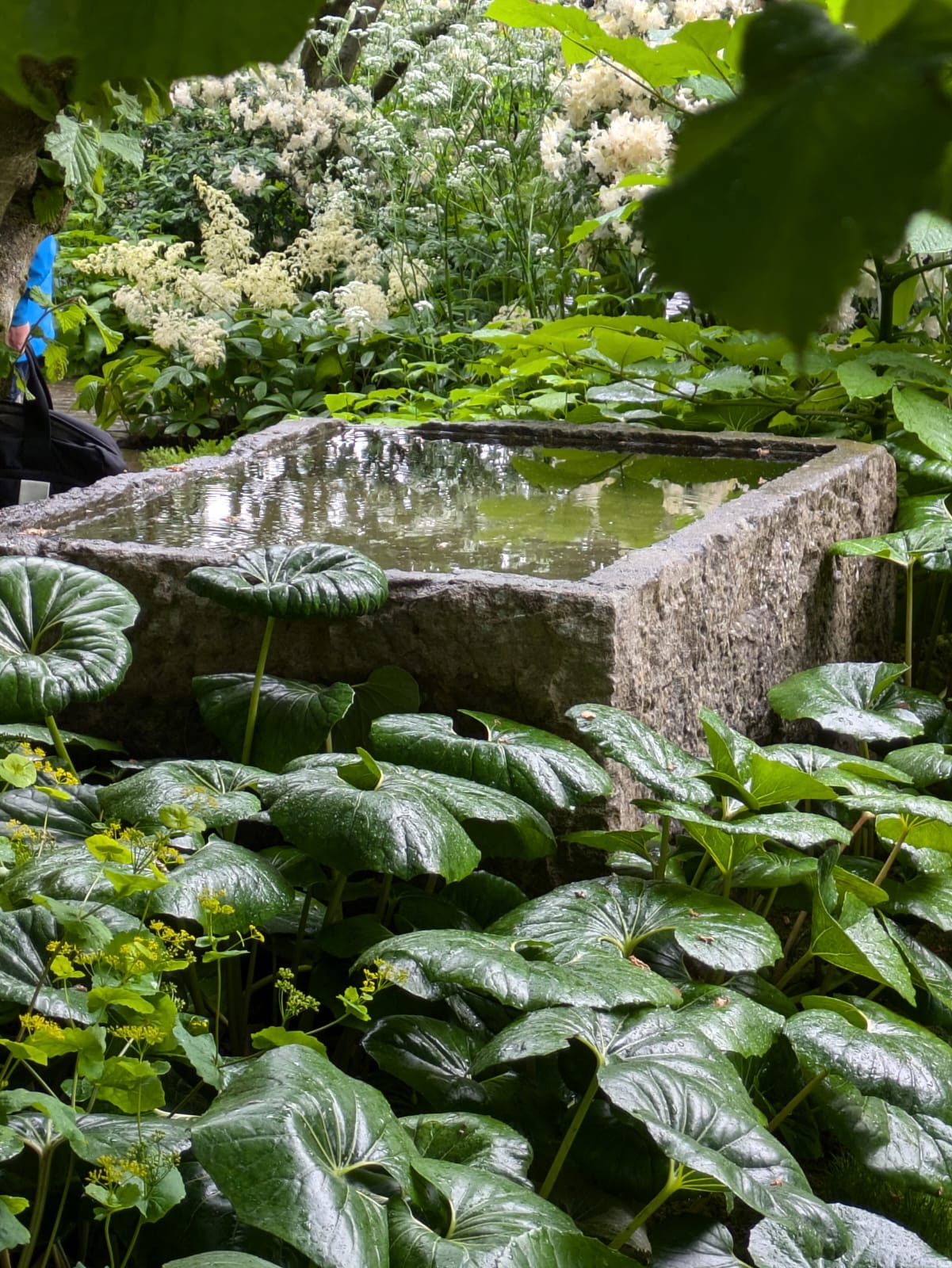
Naturally, a primary design challenge of modern water security is visual integration. Industrial green or black plastic tanks can disrupt the flow of traditional cottage gardens, informal English borders, or structural woodland schemes. In contrast, reclaimed oak barrels and weathered stone cisterns blend seamlessly into established landscapes.
The natural silver-grey patina of aged oak and the textured patina of weathered zinc steel mimic organic garden tones. Indeed, within gardens of bark, stone paths, and timber outbuildings, substantial water assets remain hidden in plain sight. In addition, positioned against brick facades, hidden within deep perennial borders, or softened by climbing cultivars, these containers turn functional utility into an attractive design asset.
Operational Best Practices for Beating The Heat: Rainwater Collection
To maximize the performance of your water harvesting architecture during a dual-heatwave summer, implement these core operational strategies:
- First-Flush Diversion: Install a mechanical first-flush water diverter on your downpipes. Importantly, this isolates and discards the initial, highly concentrated pulse of debris, atmospheric dust, and avian organic matter accumulated on the roof surface during dry spells, ensuring only clean water enters the main reservoir.
- Biological Contamination Management: Prevent toxic algal blooms and bacterial proliferation within your storage units by utilizing secure, light-blocking covers. Furthermore, for non-potable irrigation use, treat stored volumes with organic, microbial enzymes or safe silver-ion water purification tablets to suppress pathogens without harming soil ecology.
- Gravity-Fed Micro-Irrigation Integration: Elevate your water barrels on solid stone or brick footings to build natural hydrostatic head pressure. As a result, this allows you to run a low-pressure, gravity-fed drip-line or porous soaker hose directly into your highest-value ornamental beds. Thus, it delivers water efficiently to root zones early in the morning, before the heat of the day and allows you to beat hosepipe restrictions.
References and Verified Data Sources for This Beat The Heat Article
- Met Office (UK): Provisional Climate Summary and Temperature Verification Data, June–July 2026.
- World Meteorological Organization (WMO): Global Climate Update: Western Europe Extreme Thermal Anomalies & El Niño Phase Tracking, issued June 2026.
- Copernicus Climate Change Service (C3S): European Centre for Medium-Range Weather Forecasts (ECMWF) Monthly Regional Marine Heatwave Metrics, July 2026.
- Environment Agency & Statutory Water Suppliers: Water Industry Act 1991: Temporary Use Ban (TUB) Notifications for South East Water, Yorkshire Water, and Southern Water networks, July 2026.

