

The Sustainable Autumn Garden: Using Reclaimed Materials for Better Soil and Winter Wildlife
As autumn temperatures cool and leaves begin to drop, many gardeners gear up for the sustainable garden option. Standard winter prep usually involves buying plastic row covers, synthetic mulches, and new storage bins from local garden centers. However, there is a far more sustainable, cost-effective alternative right under your nose: reclaimed materials.
By closing the loop in your backyard—repurposing salvaged items like old glass, discarded cardboard, untreated wood pallets, and fallen tree limbs—you can safeguard your soil, extend your growing season, and build an ecosystem that supports both plants and local wildlife through the coldest months.
Nurturing Soil and Flora for Winter Planting and Spring Blooms
Healthy spring flowers and robust winter crops begin with protected, nutrient-rich soil. Rather than letting bare beds erode under heavy rain, frost, and wind, reclaimed materials provide effective, low-cost solutions.
Sheet Mulching and Hugelkultur
-
Sheet Mulching: Unprinted plain corrugated cardboard acts as an ideal weed barrier and soil insulator. Layered directly over garden beds in Autumn with leaves and compost is a sustainable practice. It breaks down slowly over winter, attracting earthworms and softening the earth for spring planting.
-
Hugelkultur Beds: Burying logs, fallen branches, and decaying wood scraps creates raised planting beds that act like sponges. As the buried wood slowly decays over winter, it releases heat, retains moisture, and feeds beneficial fungi—giving early spring bulbs and perennials an ideal environment.
DIY Micro-Greenhouses and Cold Frames
-
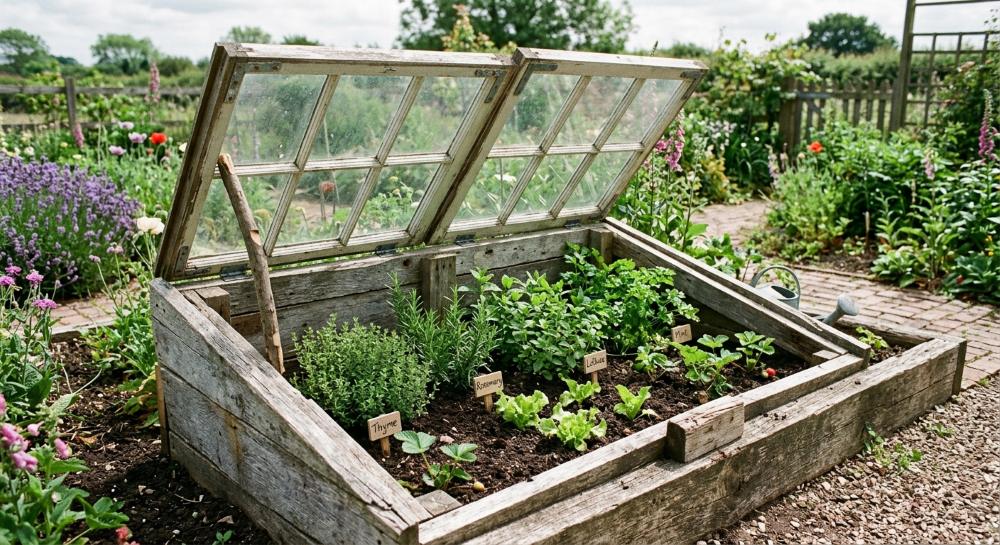
Old Windows: Salvaged wooden window sashes can be hinged onto a frame built from scrap timber (or even balanced across straw bales) to create insulated micro-greenhouses. These trap solar radiation, allowing you to grow cold-hardy greens (like spinach and kale) straight through winter while keeping tender spring seeds protected from early frosts.
-
Upcycled Containers: A sustainable garden staple, clear plastic storage bins turned upside down or large glass jars used as cloches protect young seedlings from freezing Autumn air without blocking sunlight.
Raised Bed Framing and Thermal Edging
-
Bricks and Slate: Salvaged masonry, broken patio pavers, or old roofing slate work as effective garden edgings. They hold soil in place during heavy winter rains and act as thermal mass—absorbing heat during bright winter days and releasing it slowly into the soil at night.
Supporting Garden Fauna Over Winter
Winter is a challenging season for garden wildlife. As natural shelters thin out and food sources shrink, upcycled garden elements offer vital refuge for beneficial insects, amphibians, birds, and small mammals.
Bug Hotels and Solitary Bee Nesting
-
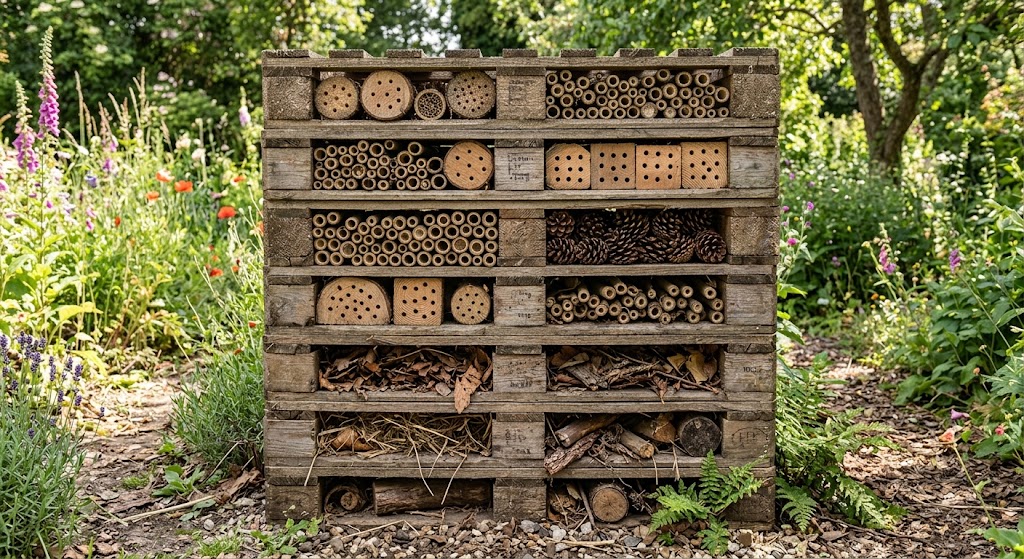
Pallet Towers: Stacked wooden pallets are used for a number of sustainable garden projects, and it’s no different when Autumn rolls in. Filled with hollow bamboo canes, drilled wood blocks, pinecones, and dry leaves they provide winter shelter for overwintering ladybugs, lacewings, and solitary bees. These beneficial insects awaken ready to control spring pests like aphids. Check out the RHS post on this subject here.
Amphibian and Mammal Habitats in the Autumn Garden
-
Rock and Log Rockaries: Stacking reclaimed bricks, broken tiles, logs, and old terracotta pots creates dark, frost-free crevices. Toads, frogs, and hedgehogs use these spots to hibernate, staying safe from predators and cold snaps. In return, toads will help manage your slug population come spring.
Bird Shelters
-
Scrap-Wood Roosting Boxes: Scrap untreated lumber can easily be turned into sustainable autumn and winter roosting pockets or bird platforms in the garden. Offering shelter during freezing nights helps local songbirds conserve energy, keeping them in your garden to manage overwintering insect pupae.
Protect Your Autumn Garden With Cold Frames
Collect 1 or 2 old wooden window sashes, scaffold boards (or a staves from an old barrel), hinges, and wood screws. Ensure wood is untreated and paint is lead-free.
Build a simple rectangular wooden box that matches the dimensions of your window sash. Cut the sides so the top slants downward slightly toward the south. This maximizes sun exposure and sheds rain or snow. Watch this Facebook reel for inspiration.
Attach the window sash to the high side of the wooden frame using hinges. Add a small latch or stick prop so you can vent the cold frame on warmer sunny days.
Place the cold frame over a raised bed or directly on rich soil in a sunny spot. Line the base with cardboard and compost before planting winter greens or overwintering potted perennials.
A Thriving Winter Ecosystem: The Sustainable Autumn Garden
Using reclaimed materials in the autumn garden is more than a budget-friendly DIY project—it’s an intentional approach to ecosystem management. By protecting soil structure, insulating delicate plants, and creating winter refuges for wildlife, you set the foundation for a resilient, self-sustaining garden that bursts into life come spring.

